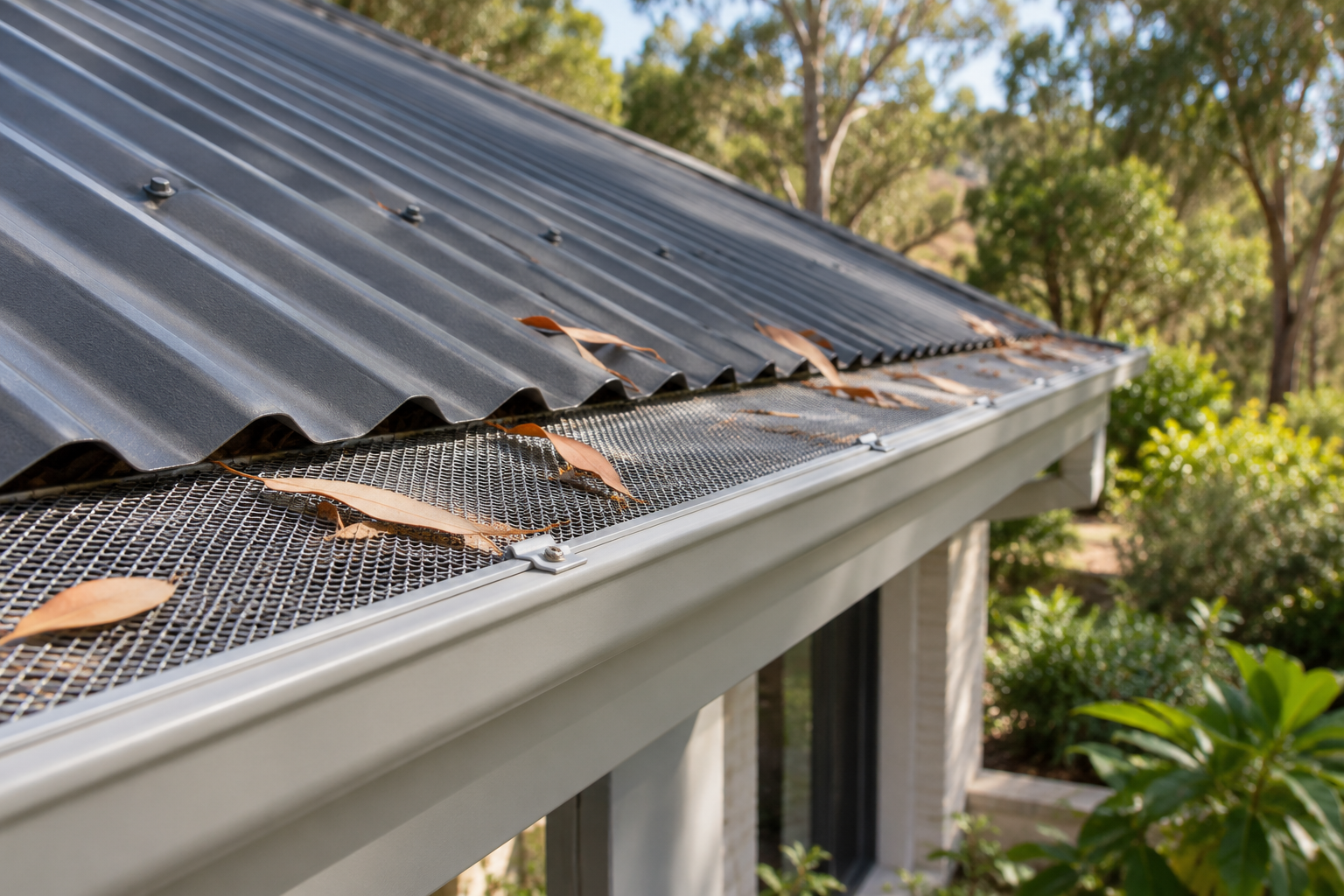
Leaves collecting along a roofline can turn a routine maintenance job into a recurring frustration, particularly on properties surrounded by established trees. Installing gutter mesh can help limit the larger debris entering the drainage channel while allowing rainwater to pass through. The best starting point, however, is understanding where material collects and whether the existing system drains properly. A gutter guard should suit the roof profile, surrounding vegetation and access needed for future cleaning. Those details matter because a covering cannot repair a sagging section or clear a blocked downpipe. Effective gutter protection therefore works as part of a broader maintenance plan that addresses both falling debris and the condition of the roof drainage system.
Understand What Is Collecting Around the Roof
Different trees create different maintenance challenges. Broad leaves may gather across a roof valley, while small leaves, seeds and bark can settle into corners or around outlets. Wind can also move material from neighbouring properties, so an overhanging branch is not always the only source.
Observations from ground level can help identify patterns. Leaves repeatedly collecting above a verandah, for example, may indicate a sheltered spot where debris does not readily blow away. A roofline exposed to several nearby trees may need closer attention during periods of heavy shedding.
These observations give an installer useful context when assessing a suitable screening system. They also help establish realistic expectations: reducing the amount of large debris entering a channel does not mean every small particle will be excluded.
Check Drainage Before Adding a Cover
A screening product should be installed over a system that is already in serviceable condition. Existing debris needs removing, outlets need checking and damaged sections need assessment before access becomes more restricted.
Water spilling over an edge can have several causes. A blockage may be responsible, but the problem could also involve the gutter’s alignment, an inadequate outlet or another drainage issue. Repeated overflow deserves investigation rather than an assumption that leaf exclusion alone will resolve it.
The Australian Government’s YourHome guidance recommends regular cleaning, checking for leaks and ensuring adequate fall towards drainage outlets. These remain relevant considerations when planning an installation.
A useful assessment should explain any repairs required and distinguish them from the work involved in fitting the screen. That makes the proposed solution easier to understand and compare.
Compare the Installation and Maintenance Details
Product appearance is only one part of the decision. The screen needs to suit the roofing material and gutter shape, with an appropriate fixing method and a clear plan for corners, valleys and other junctions.
Homeowners can ask how the installer selects the opening size for the debris present around the property. Smaller openings and different profiles have practical implications, so suitability should be explained in relation to the specific roof rather than through a general claim that one design suits every home.
Future access deserves equal attention. A quote should clarify how accumulated material will be removed, whether sections can be accessed for inspection and who can carry out that work.
Written information about materials, installation workmanship and warranty conditions also helps avoid confusion. A product warranty and an installer’s workmanship warranty may cover different issues, making the details more useful than the headline warranty period alone.
Keep a Realistic Maintenance Routine
After installation, the roof drainage system still needs observation and periodic attention. Leaves can collect on top of screening or elsewhere on the roof, while smaller material may require removal over time.
Maintenance frequency should reflect the property’s conditions and the supplier’s instructions. A home beneath heavily shedding trees may need a different routine from an open suburban block. Checking after substantial leaf fall or strong winds can help reveal changes that a fixed calendar reminder might miss.
For homes collecting rainwater, the wider system also requires attention. YourHome identifies roof and gutter checks, debris removal and cleaning of relevant screens and collection components as part of ongoing system maintenance.
Access should be planned carefully. Roof inspection and cleaning can involve fall hazards, and professional assistance is a sensible option where the work cannot be completed safely. The ACCC highlights that unsafe ladder use can cause serious injuries and advises householders to consider whether a ladder is appropriate for the task.
The most useful outcome is a system that is easier to manage, with clear expectations about its performance and upkeep. Homeowners should know what has been installed, which areas still need checking and how future maintenance will be handled.
Keeping gutters clear involves managing falling debris, checking drainage and planning regular maintenance that suits the roof and surrounding trees.

