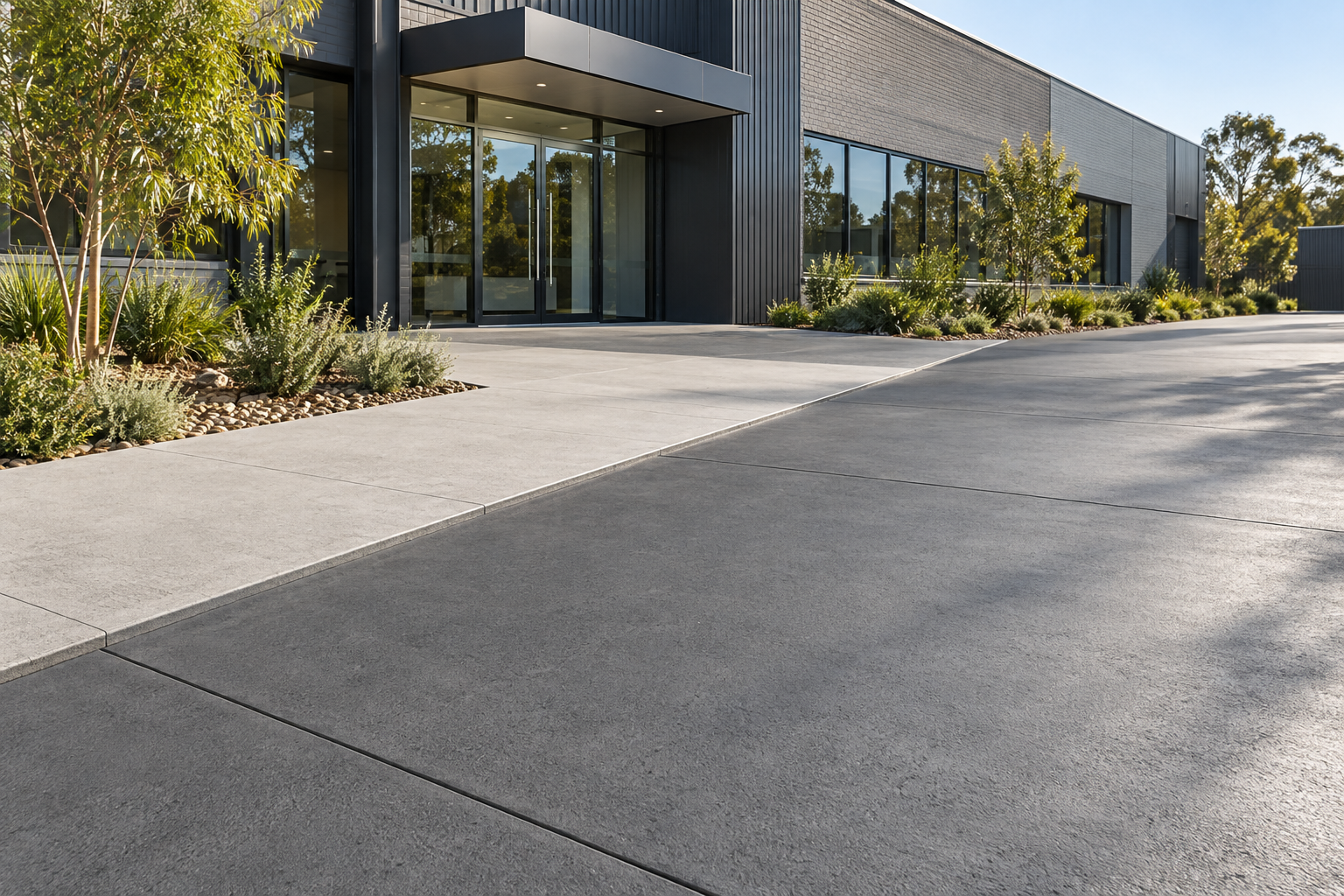
For commercial property managers, selecting concrete paint colours involves more than refreshing a tired entrance or parking area. The decision affects how a site presents to customers, how visibly dirt accumulates and how easily future repairs can blend with existing surfaces. A refurbishment brief should therefore connect appearance with maintenance requirements before contractors price the work.
Choosing a concrete sealer introduces a separate specification decision, particularly where an existing surface needs protection rather than a complete visual change. Property owners should establish the intended finish, expected traffic and compatibility with previous treatments. Assuming every protective product performs the same function can lead to unclear quotations and unsuitable purchasing decisions.
For shopping strips, small warehouses and professional premises, these projects also create scheduling challenges. Vehicle access, deliveries and tenant operations must be considered alongside the physical work, making early coordination essential to controlling disruption.
Colour selection needs a practical brief
Colour samples provide a starting point, but the final choice should reflect the property’s operating environment. Nearby landscaping, building materials, signage and lighting all influence how a finished surface appears.
Darker shades may disguise some marks while making lighter dust more noticeable. Pale finishes can create a different presentation but may show tyre marks or tracked dirt more clearly. The relevant question is which appearance best suits the site’s normal conditions.
Property managers should also consider consistency across adjoining areas. An entrance, pedestrian path and vehicle zone do not necessarily need identical finishes, but their relationship should be intentional.
Approving a sample area gives stakeholders a more useful reference than a small printed swatch. It also creates an opportunity to assess texture and sheen before the broader application proceeds.
Surface condition determines the scope
Refurbishment budgets can become unreliable when the existing concrete is assessed only from photographs. Stains, old treatments, damaged sections and drainage issues may require different preparation methods.
Contractors need to identify what is already on the surface and whether it can remain beneath the proposed system. Where records are unavailable, further inspection or testing may be necessary before the specification is finalised.
Visible cracking also deserves attention before cosmetic work begins. Covering a defect does not establish that its cause has been resolved.
For property owners, separating repair requirements from finishing work improves cost transparency. It allows quotations to show which tasks address existing deterioration and which deliver the requested appearance.
Access planning influences commercial costs
Businesses evaluating driveway coatings need to account for the period during which vehicles cannot use the treated area. Application time alone does not establish when normal traffic can resume.
The product instructions and site conditions should inform the contractor’s proposed reopening schedule. Pedestrian access and vehicle access may require different arrangements.
At occupied premises, staging can help maintain operations. However, dividing work into smaller sections may increase setup requirements and complicate movement around the site.
A practical access plan identifies delivery windows, tenant parking needs and alternative customer entry points. Communicating these arrangements before work starts reduces confusion and helps businesses prepare for temporary changes.
Moisture and preparation affect reliability
One relevant technical concept is porosity, which describes the void spaces within a material. Concrete’s surface characteristics help explain why preparation and product suitability matter when selecting a finishing system.
A surface that appears clean may still need additional treatment before application. Contractors should explain the preparation method and how they will determine that the area is ready.
Moisture conditions also need consideration under the selected product’s instructions. A quotation that omits these checks can leave uncertainty about what happens if application cannot proceed as planned.
The commercial priority is a defined process rather than an optimistic completion date. Property managers should know which conditions could delay work and how the contractor will communicate revised timing.
Comparable quotations require clear specifications
Price comparisons become difficult when contractors quote different preparation standards, application systems or repair allowances. A lower figure may simply cover a narrower scope.
A useful request for quotation identifies the area, intended use, desired appearance and known surface history. Contractors can then state their assumptions and explain any exclusions.
The proposal should also address cleaning requirements, maintenance expectations and the treatment of future repairs. These details help owners understand the ongoing implications of their initial choice.
Keeping product and colour records supports later maintenance. Without them, even a modest repair can involve extra investigation and uncertain matching.
Handover completes the investment
A completed surface needs more than visual approval. Property managers should receive reopening instructions, maintenance guidance and a record of the system applied.
Tenant communication should continue through handover, particularly where access restrictions remain in place after application. Clear instructions help prevent premature use and avoidable damage.
For commercial properties, a successful refurbishment combines appearance with manageable disruption and documented maintenance requirements. Decisions made before application influence the outcome as much as the final colour. A clear brief, realistic schedule and consistent records give owners a stronger basis for protecting their investment.

